Part II: The Digital Builder | Chapter 7
Building and Publishing Websites
The Goal
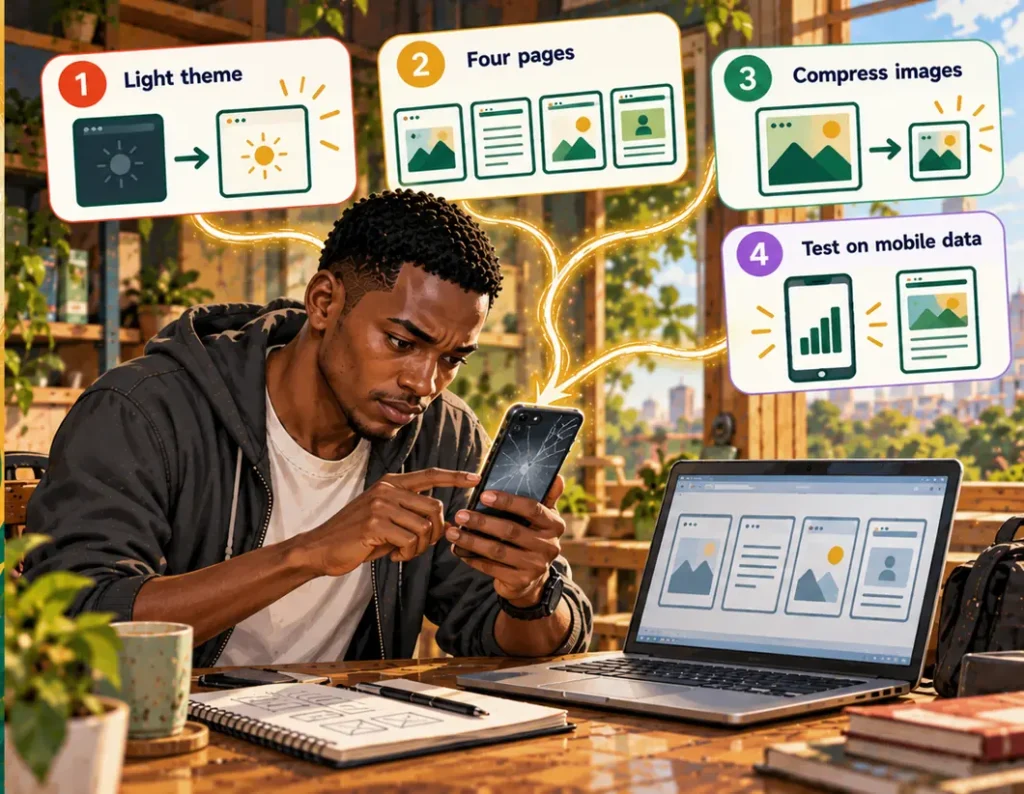
By the end of this chapter you will be able to build a small, fast website that works on cheap phones with limited data. You will choose the right platform, register a domain and set up hosting, prepare images and text for mobile, make the site easy to read and easy to find, and test it the way your visitors will use it. You will also know why a website is never finished on the day it goes online.
Understand: choose the simplest platform that does the job
| Approach | What it is | Good for | Not good for |
|---|---|---|---|
| Website builder | Drag and drop; the provider hosts the site for a monthly fee | A simple site online in a day | Clients who want to own their site, or can’t afford monthly fees for years |
| Content management system (WordPress) | Free software on rented hosting; thousands of themes and plugins | Most small organisations; sites the client edits later | A single page that never changes |
| Custom code | Written from scratch in HTML, CSS and JavaScript | Very specific applications | Clients who need to change text themselves |
For most small organisations in Kenya, WordPress is a good default: the software is free, the client owns the site, and someone at the organisation can learn to change a phone number or add a notice.
One rule protects every website: install a plugin only if the brief needs it. Every plugin is code that can slow the site down, break during an update or open a security hole.
Continue with Missing Linkk Learn
The rest of this chapter is for members. Early access is free until 31 March 2027: every chapter, every prompt, and your own results saved on your phone.