
Part V: The Tool Landscape | Chapter 18
The Sound of Trust — Voice and Music
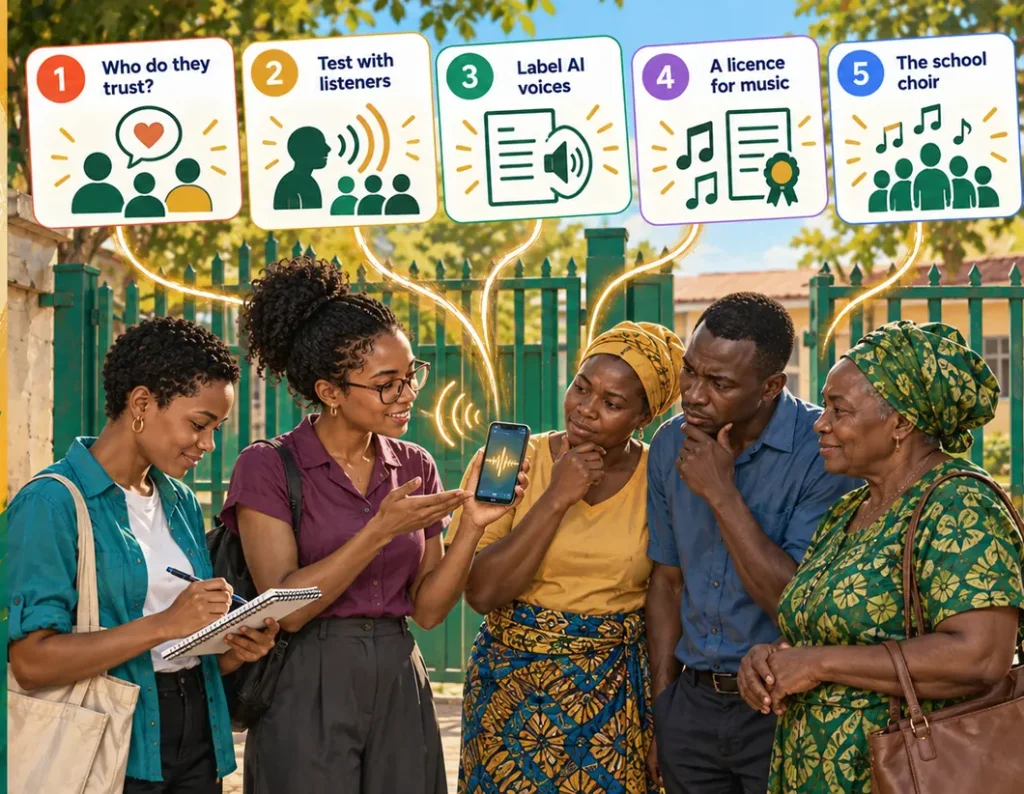
The Goal
By the end of this chapter you will know where a voice and a piece of music can come from: a real person, a generated voice, a music library, an AI music generator or a local musician. You will know which questions decide between them, test a voice with real listeners, and check that the licence covers the way your client will use the sound.
Understand: the voice is the face of the film
People decide in seconds whether a voice is talking to them. A voice with an accent from far away tells the listener: this wasn’t made for you. A voice that sounds like their teacher, their neighbour or their pastor tells them the opposite. So the first question is not which tool sounds best, but who your listeners trust.
| Source | Good for | Watch out |
|---|---|---|
| A real person | Trust, local language, a face people know | A quiet room, a good script, their written agreement |
| Text-to-speech | Fast versions, many languages, changes without a new recording | Accent, pronunciation of names, commercial terms |
| A cloned voice | Your own voice in many versions | Only your own voice, or with written consent (Chapter 19) |
Continue with Missing Linkk Learn
The rest of this chapter is for members. Early access is free until 31 March 2027: every chapter, every prompt, and your own results saved on your phone.