Building a Content Production System
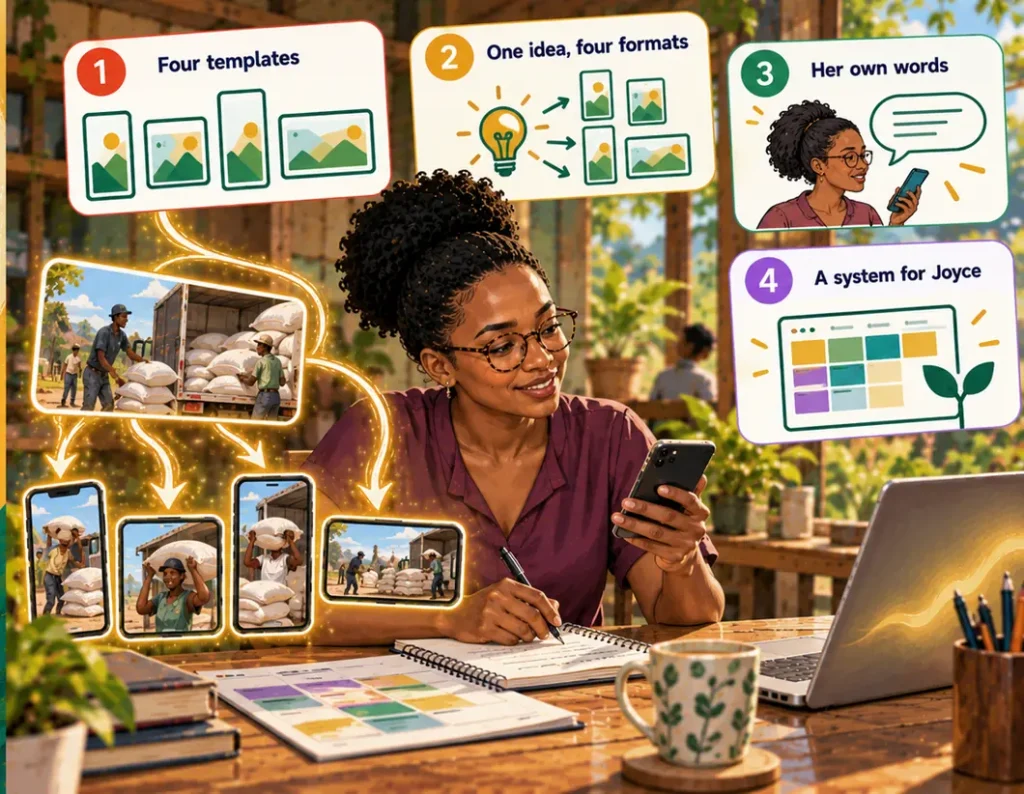
By the end of this chapter you will be able to turn a strategy into a production system: a repeatable way to make posts, statuses, short clips and messages from approved material. You will adapt one idea to several formats without copying, build templates in Canva so you never start from an empty page, cut short clips from the film in CapCut, plan posts ahead in Meta Business Suite, coordinate with the people who supply your material, and set a rhythm that someone can keep up for months, not only for a launch.
From Images to Film
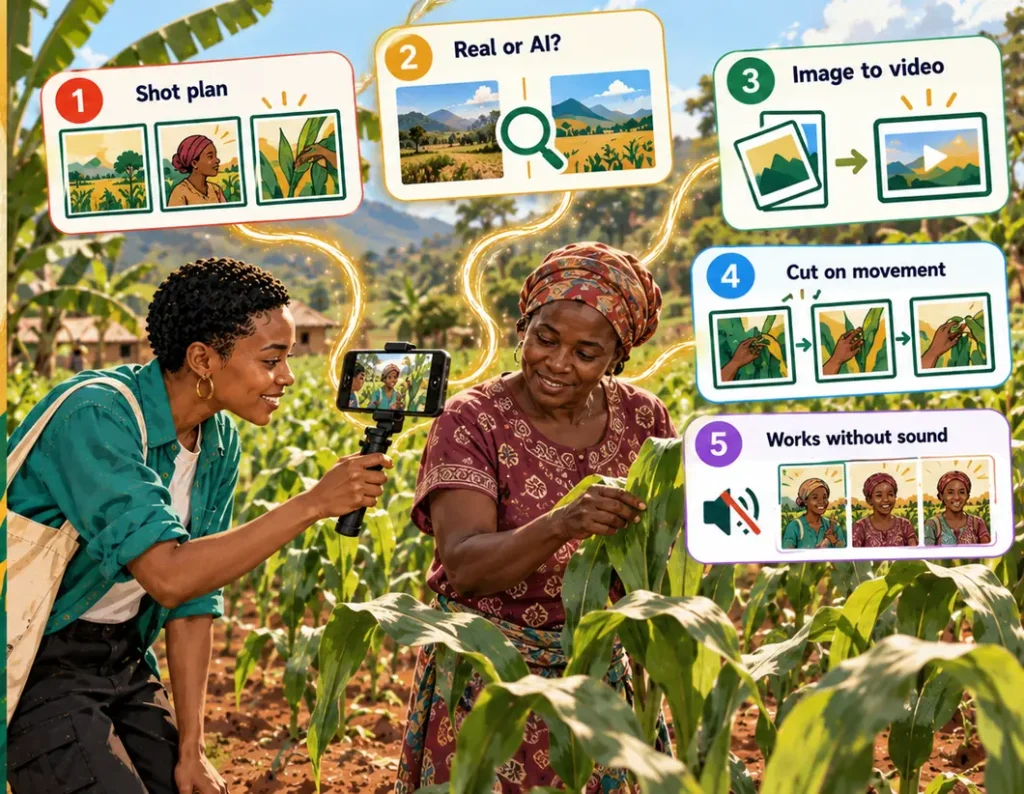
By the end of this chapter you will be able to plan and make a short promotional film, from the idea to the export. You will know when to film for real and when AI video helps, how to turn a still image into a moving shot, how to edit for rhythm, and how to add voice, music and subtitles so the film works with and without sound. You will edit the film in CapCut on your phone and know what the professional route adds.
Beyond the Chat Window — Your AI-Powered Workspace
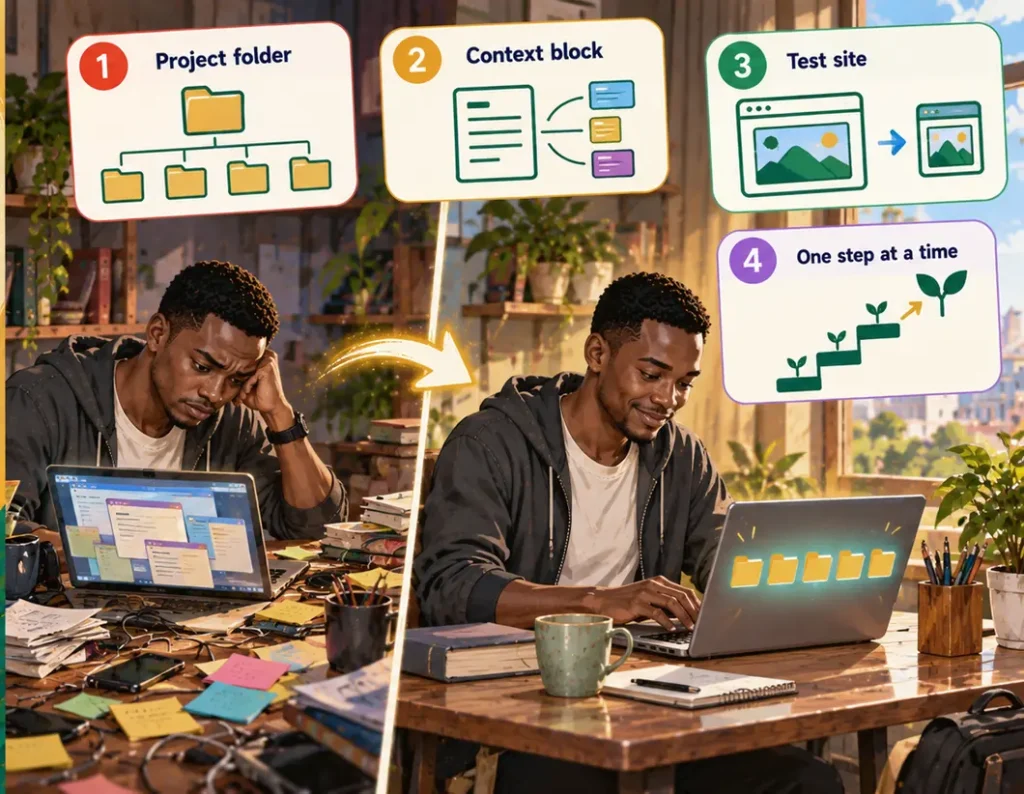
By the end of this chapter you will know why a chat window alone is not enough for production work. You will set up a workspace where files, project information, AI help and your applications fit together: a shared project folder in Google Drive, a ChatGPT project with the right files, and a simple log of requests and approvals. You will know what an AI tool can and cannot see on your computer, and how to give it the right context without giving it more access than it needs.
AI-Assisted Programming — From Idea to Working Code
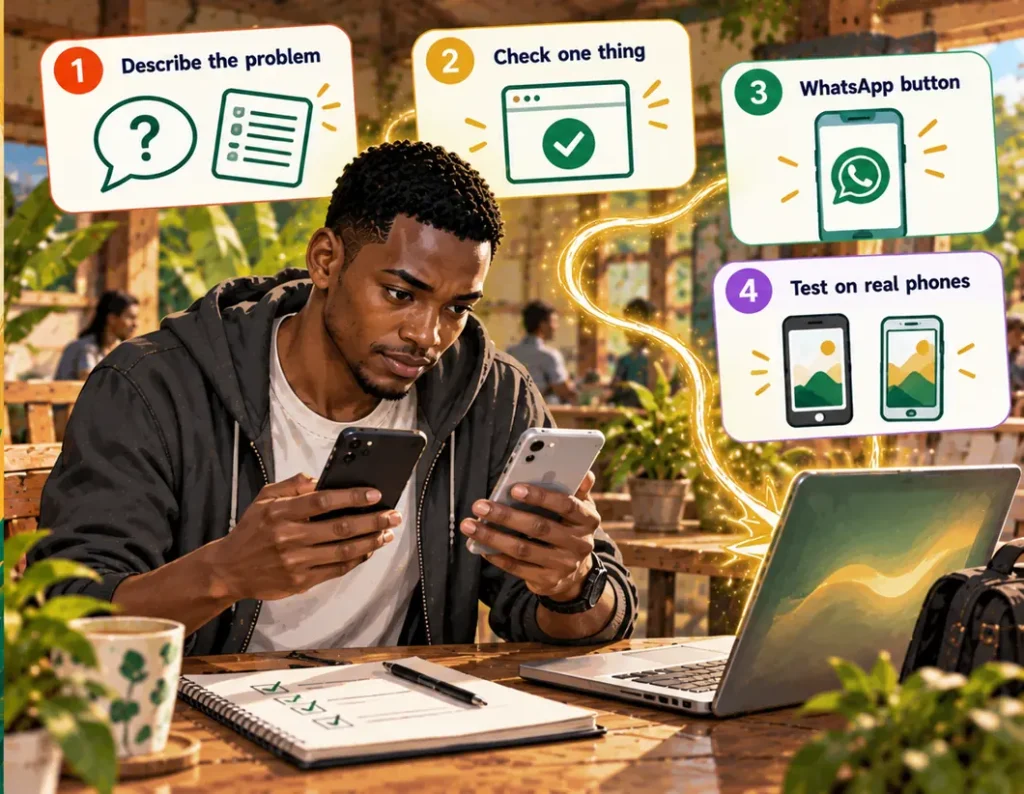
By the end of this chapter you will be able to use AI as a programming partner: describe what you need, get code, understand what it does, find errors, test and improve step by step. You will know the difference between code that looks right and code that works, and why the responsibility for security stays with you. You will build a working contact form in WordPress, make sure its messages really arrive, add a WhatsApp button and test both the way a visitor uses them. You will not become a professional programmer here. You will become someone who can build small working solutions and stay in control of them.
Building and Publishing Websites
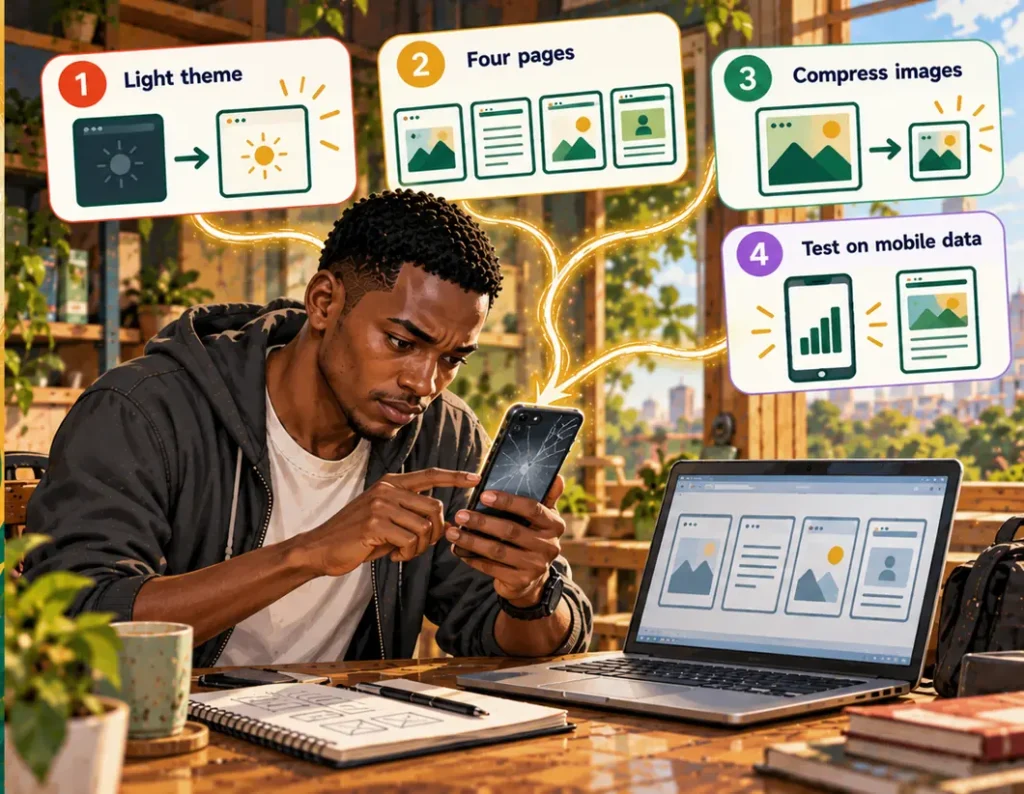
By the end of this chapter you will be able to build a small, fast website that works on cheap phones with limited data. You will choose the right platform, register a domain and set up hosting, prepare images and text for mobile, make the site easy to read and easy to find, and test it the way your visitors will use it. You will also know why a website is never finished on the day it goes online.
Automation and Digital Products
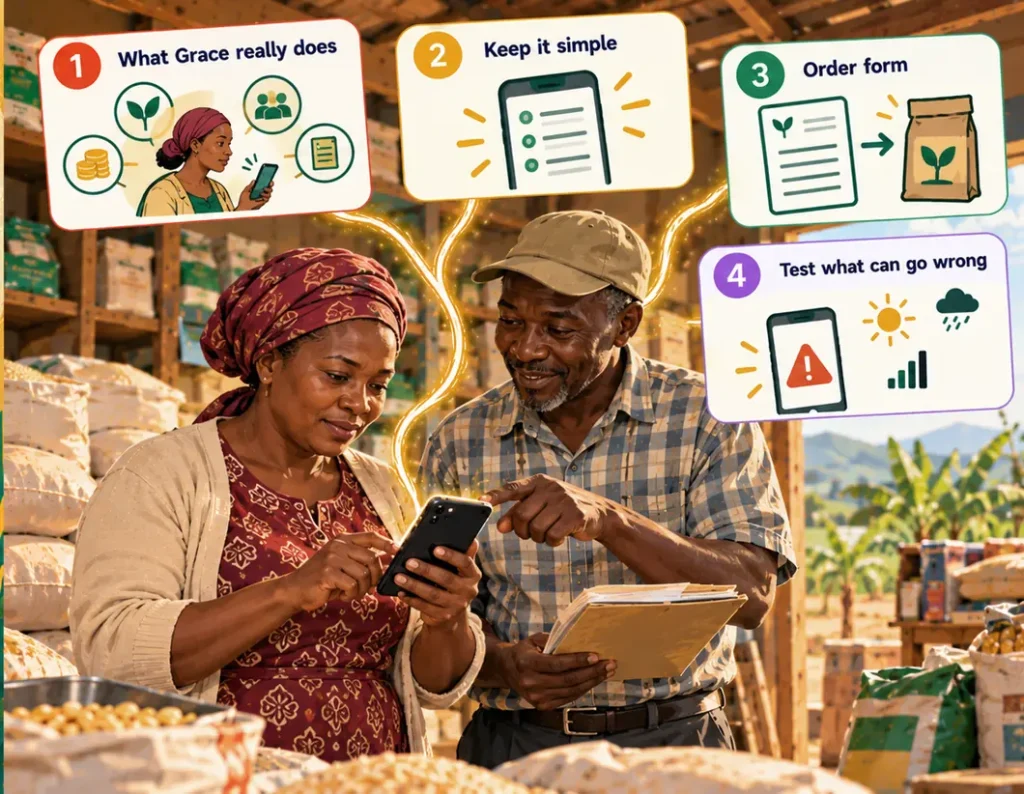
By the end of this chapter you will know when automation saves real time and when it creates hidden problems. You will find the tasks worth automating, connect applications in a simple way, build a small digital tool for one real problem, and test what happens when things go wrong. You will build an order form with Google Forms and Sheets, set up WhatsApp Business so the same questions get quick answers, and know what an automation platform such as Make adds. And you will know the most important rule: if a mistake would hurt someone, a human approves before it happens.
Strategy Before Posting
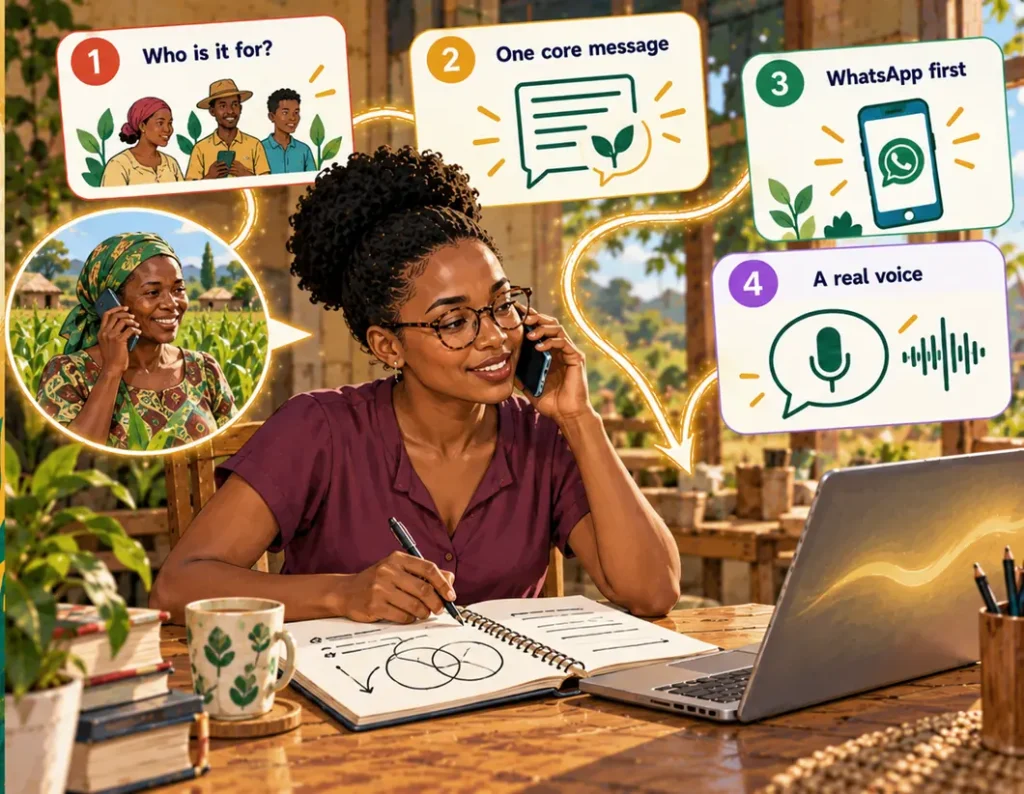
By the end of this chapter you will be able to build a communication strategy before you make a single post: who exactly you talk to, the one message they should remember, the channels where they already are, and goals that measure what the client really needs. You will set up the client’s Facebook Page, choose the right WhatsApp tool for each job and start an editorial calendar. You will understand the difference between getting attention and getting results. And you will see that a good strategy is not a reason to wait; it makes acting faster.
Welcome to Creative Production
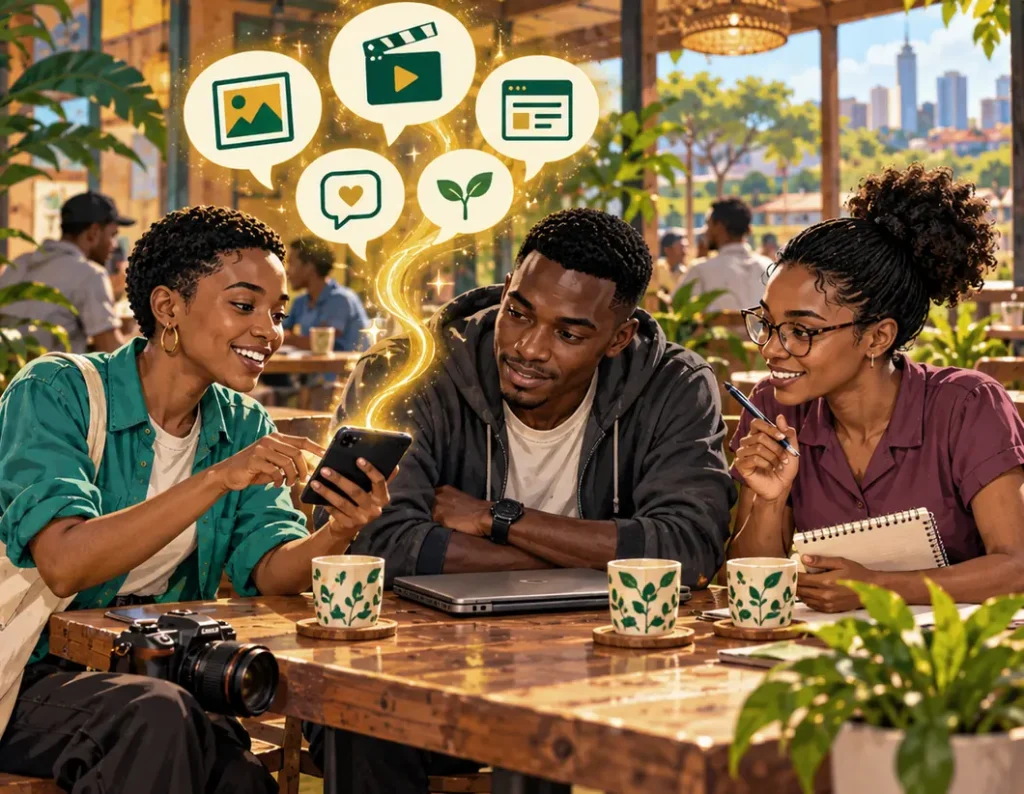
By the end of this chapter you will understand what creative production means and how it differs from simply generating content with AI. You will meet the three people who will learn alongside you, set up the few free tools you need for Part I, and set one creative goal you want to reach with this book.
From Brief to Visual Concept
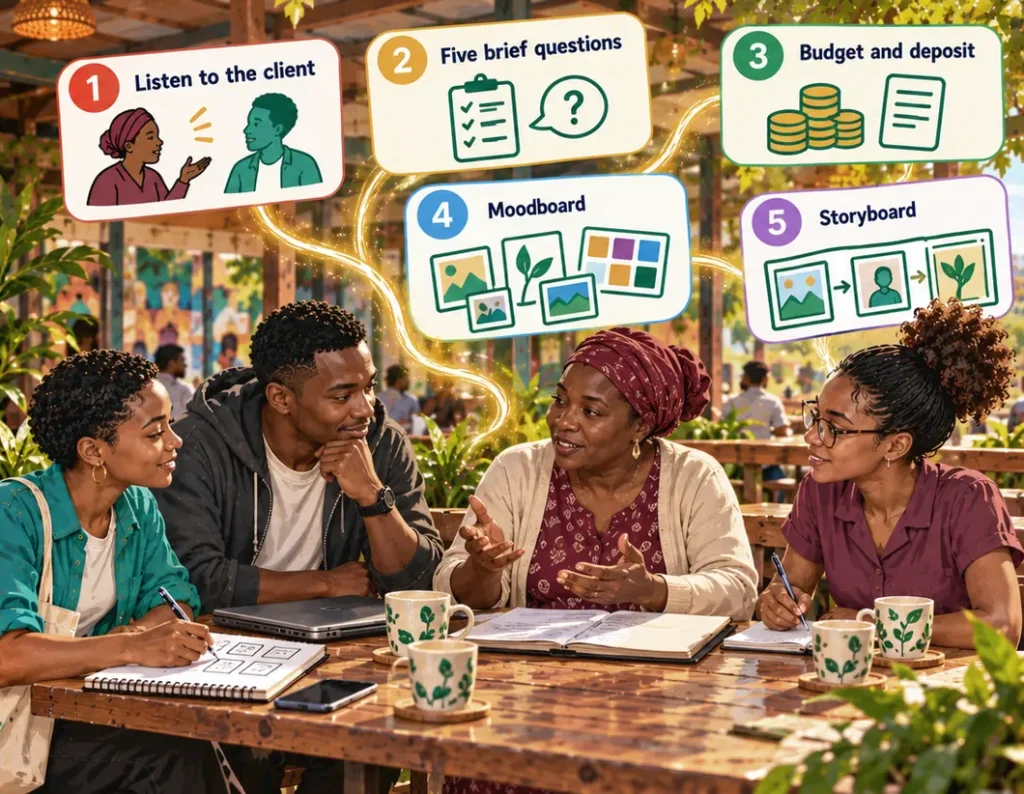
By the end of this chapter you will be able to turn a client’s request into a clear plan before you create anything. You will know how to read a brief, ask the right questions, agree on budget and payment in writing, build a moodboard and write down exactly what you will deliver. You will also set up a project space in ChatGPT and a moodboard in Canva that you use for the rest of the project. This is the step most beginners skip, and it decides whether your work fits.
Generating and Controlling AI Images
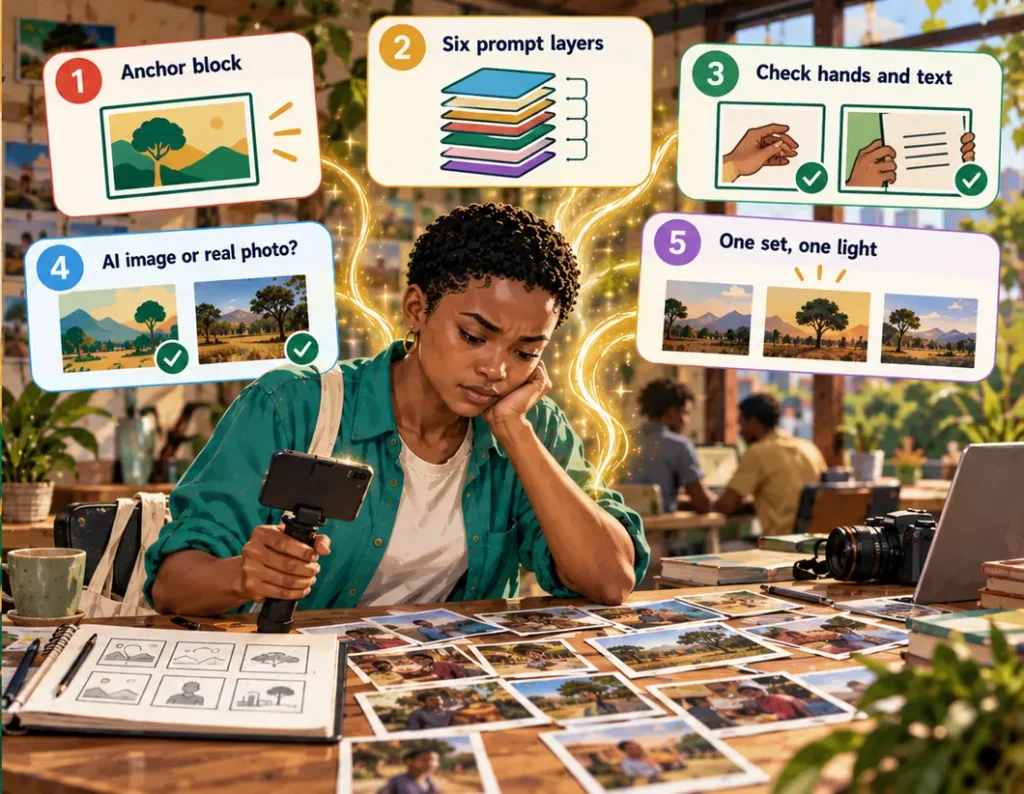
By the end of this chapter you will be able to make a set of images that belong together, through a process you can repeat instead of by luck. You will control subject, setting, composition, light and style, spot the typical errors of image generators, and know when a picture must be a real photograph instead of an AI image. You will make the set in ChatGPT, finish it in Snapseed and add real text in Canva.